
Critical equipment
How Elevator Modernisation Reduces Costs and Downtime: Expert Interview with James Wigg

Author
Shafaq
Sobani-Mailk
Date
09/12/2025
Time
6 min read
Share


Extending the Life of Critical Building Equipment
Since its inception, WeMaintain’s focus has been on looking after the whole building and finding ways to improve the lifespan of your critical equipment. Naturally, this led to the development of our Modernisation teams to tackle the question on whether a lift needs a full-replacement or can it be modernised?
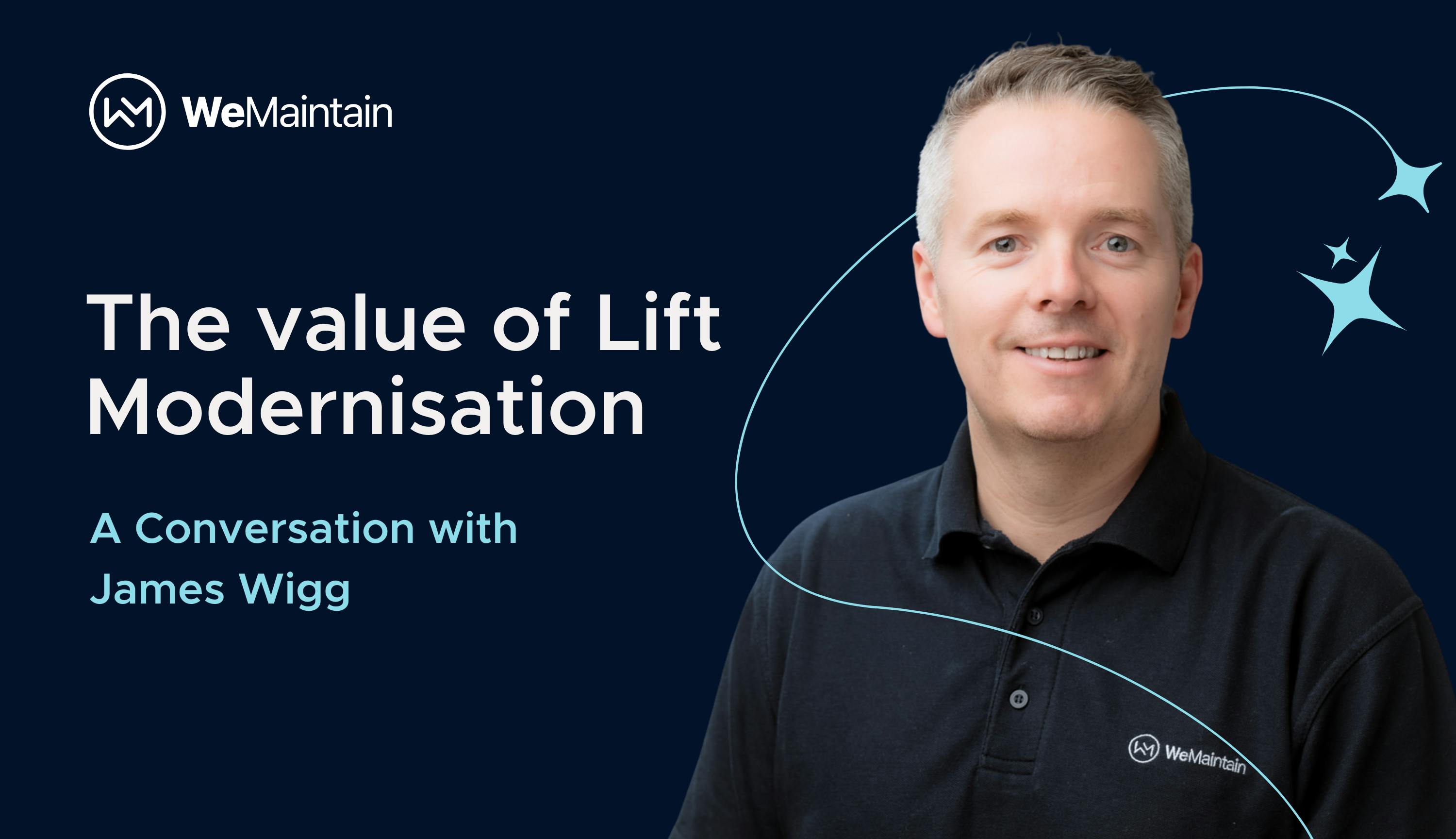
To look at how WeMaintain supports its clients with their modernisation (or full installation) needs, I took the opportunity to speak with James Wigg, the Modernisation Sales Manager at WeMaintain in the UK. James has a wealth of experience within the industry and originally started with Schindler and learnt the foundations of Modernisation. From there he spent some time at Otis, and then eventually found WeMaintain. With 25+ years within the lift industry, and being NVQ L3 qualified in both lifts and escalators, let’s hear what James had to say about Modernisation.
What brought you to WeMaintain, and what excited you about the role?
James: I’ve been in the lift industry since I was 18, starting at Schindler where I spent 10 years modernising and repairing lifts. I then joined Otis, working on high-profile sites like Harrods, and qualified in escalators as well, becoming dual-skilled.
Although I enjoyed the technical side, I realised I missed the challenge of modernisation, which led me into a sales role. I really found my stride there — working with clients, understanding their problems, and offering technically sound solutions.
Joining WeMaintain felt like a natural progression. The move to open-protocol solutions gave me far more flexibility, and their values aligned strongly with mine. The role combines technical expertise with client engagement, and the business also supports clients with clear capital expenditure planning — helping them invest smarter, not just react to breakdowns.
How do you explain lift modernisation in simple terms? Why does it matter?
James: Lift modernisation is about upgrading older equipment to meet today’s standards for safety, reliability, and performance.
Lifts are critical to how a building functions. If they’re unreliable, it affects everyone — from tenants and visitors to building managers and owners. A good modernisation improves reliability, reduces downtime, ensures compliance, and improves the everyday experience for users.
It’s not just about machinery — it’s about keeping buildings safe, functional, and efficient.
What are the main advantages of modernisation over full replacement?
James: The biggest advantage is reduced disruption. In live buildings, modernisation is quicker and far less intrusive than replacing an entire lift.
It’s also more sustainable. Where possible, we reuse high-quality components rather than throwing everything away, reducing waste and environmental impact.
And finally, it’s more cost-effective. You get the performance and safety of a modern lift without the full cost of a complete replacement.
Can you share examples of recent projects and their impact?
James: One recent project involved modernising six lifts for a client where only one was fully operational. The existing control system was no longer supported in the UK, making parts impossible to source.
We first stabilised the situation by restoring additional lifts to service, then carried out a full modernisation — replacing control systems, machines, shaft equipment, and door operators. The result was a huge improvement in reliability and performance, and the client was extremely pleased.
Another project was a triplex modernisation in a high-end London office building. We completed it two weeks early, and the client was so happy with the result that they immediately instructed us to modernise another site.
Why are MRL modernisations becoming more popular?
James: Many MRL lifts installed in the late 1990s and early 2000s are now reaching the end of their reliable lifespan.
There’s a common belief that these lifts must be fully replaced, but that’s often not true. With open-protocol machines and control systems, we can modernise many of them effectively — improving performance, efficiency, and reliability without the cost or disruption of total replacement.
Clients also value the freedom open-protocol systems give them. They’re no longer tied to a single OEM and can choose who installs, maintains, and services their lifts.
Where do you see the modernisation sector heading?
James: The sector is only going to grow. Building owners are increasingly choosing to extend the life of their assets through modernisation rather than full replacement — especially as sustainability becomes more important.
At WeMaintain, modernisation is a major focus. With so many older MRL systems now needing upgrades, demand will continue to rise. We’re investing in strong manufacturer partnerships, open-protocol technology, and smart data-led solutions to stay ahead and deliver long-term value for clients.
The Importance of Modernisation for UK Buildings
Lift modernisation is one of the most effective ways to extend the life of critical building equipment, reduce downtime, and improve user experience. As UK building owners navigate rising maintenance costs, regulatory expectations, and demands for sustainability, modernisation offers a smarter, more cost-effective alternative to full lift replacement.
Through open-protocol solutions, strong technical expertise, and data-led decision-making, WeMaintain helps clients across London and the UK:
- improve lift reliability
- reduce operational disruption
- plan long-term investment more effectively
- extend asset lifecycle sustainably
As James highlights, modernisation isn’t just about upgrading machinery — it’s about creating safer, more efficient, and more resilient buildings for the future. If you are interested in understanding whether your lifts could benefit from modernisation, reach out to us here and we’ll get in touch!