

Heatwaves: Are lifts more likely to break down when temperatures soar?

Author
Chloé
Audibert
Date
13/04/2026
Time
7 min read
Share


In recent years, heatwaves have become more frequent and more intense. For building owners and facility managers, this raises a practical question: are lifts more likely to break down during periods of extreme heat?
The answer is yes, but it deserves some explanation.
Like any electromechanical system, a lift is designed to operate within a specific temperature range. When those limits are exceeded, certain components come under greater stress, increasing the likelihood of faults or automatic safety shutdowns.
Extreme heat does not make a lift unsafe. However, it does place additional strain on equipment that already performs hundreds, or even thousands, of journeys every day. It also highlights an important reality: good maintenance is not just about fixing breakdowns when they happen. It's about anticipating them before they occur.
Why does hot weather increase the risk of breakdowns?
Like any electromechanical system, a lift is designed to operate within a defined temperature range.
When that range is exceeded, several key components can be affected.
Electrical control cabinets and variable frequency drives naturally generate heat during operation. As ambient temperatures rise, their ability to dissipate that heat decreases. To protect the equipment, built-in safety systems may automatically stop the lift.
Machine rooms are another critical area. Often located beneath rooftops or in poorly ventilated spaces, they can reach temperatures significantly higher than those experienced outside.
Heat also affects mechanical components. Reduced lubrication efficiency, thermal expansion and the ageing of materials can all contribute to faults, particularly on older or poorly maintained equipment.
In other words, a heatwave rarely causes a breakdown on its own. More often, it exposes existing weaknesses.
🎤 Expert Insight - Gabriel S.
Do lifts really break down more often during a heatwave?
"Heat is rarely the direct cause of a breakdown. However, it increases the stress placed on key components, particularly the motor, drive and electrical control cabinet. If these components can no longer dissipate heat effectively, or if the machine room is poorly ventilated, the lift may automatically shut down to protect itself. That's a safety mechanism, not necessarily a sign of a major failure."
What are the first things you check during periods of extreme heat?
"We pay close attention to electrical control cabinets, machine room ventilation and the maintenance history of equipment that has previously shown signs of overheating or recurring issues. The objective is to identify early warning signs before they lead to service interruptions."
An automatic shutdown doesn't mean a lift is unsafe
Seeing a lift out of service during a heatwave can understandably cause concern.
However, in many cases, the shutdown is actually evidence that the lift's safety systems are doing exactly what they were designed to do.
Modern lifts are designed to automatically enter a safe state whenever abnormal operating conditions are detected. The objective is always the same: protect passengers while preventing damage to the equipment.
This is an important distinction. An automatic shutdown is not necessarily a serious failure. More often, it is a protective measure that prevents a minor issue from becoming a much larger one. Once temperatures fall back within the correct range, in most instances the lift will return itself back into normal operation without the need for engineer intervention, depending on where the temperature change was detected.
Maintenance starts long before a breakdown
You don't prepare for a heatwave on the day the temperature reaches 40°C.
Preparation starts weeks, or even months, in advance.
Preventive maintenance includes checking critical components, verifying machine room ventilation, identifying signs of wear and replacing parts before they lead to an unexpected shutdown.
Today, data allows maintenance teams to go even further.
By continuously monitoring lift behaviour, it becomes possible to identify anomalies before building occupants even notice them. Unusual operating patterns, recurring events or gradual changes in performance can all help engineers intervene before a breakdown occurs.
The goal isn't simply to respond faster.
It's to intervene at the right time.
Has technology changed the way you work?
"Absolutely. It allows us to arrive on site much better prepared. When we already have access to the lift's history and data collected before our arrival, we can focus our time on diagnosing and resolving the issue rather than gathering information."
When temperatures rise, engineers stay on the job
Heatwaves also highlight a reality that often goes unnoticed.
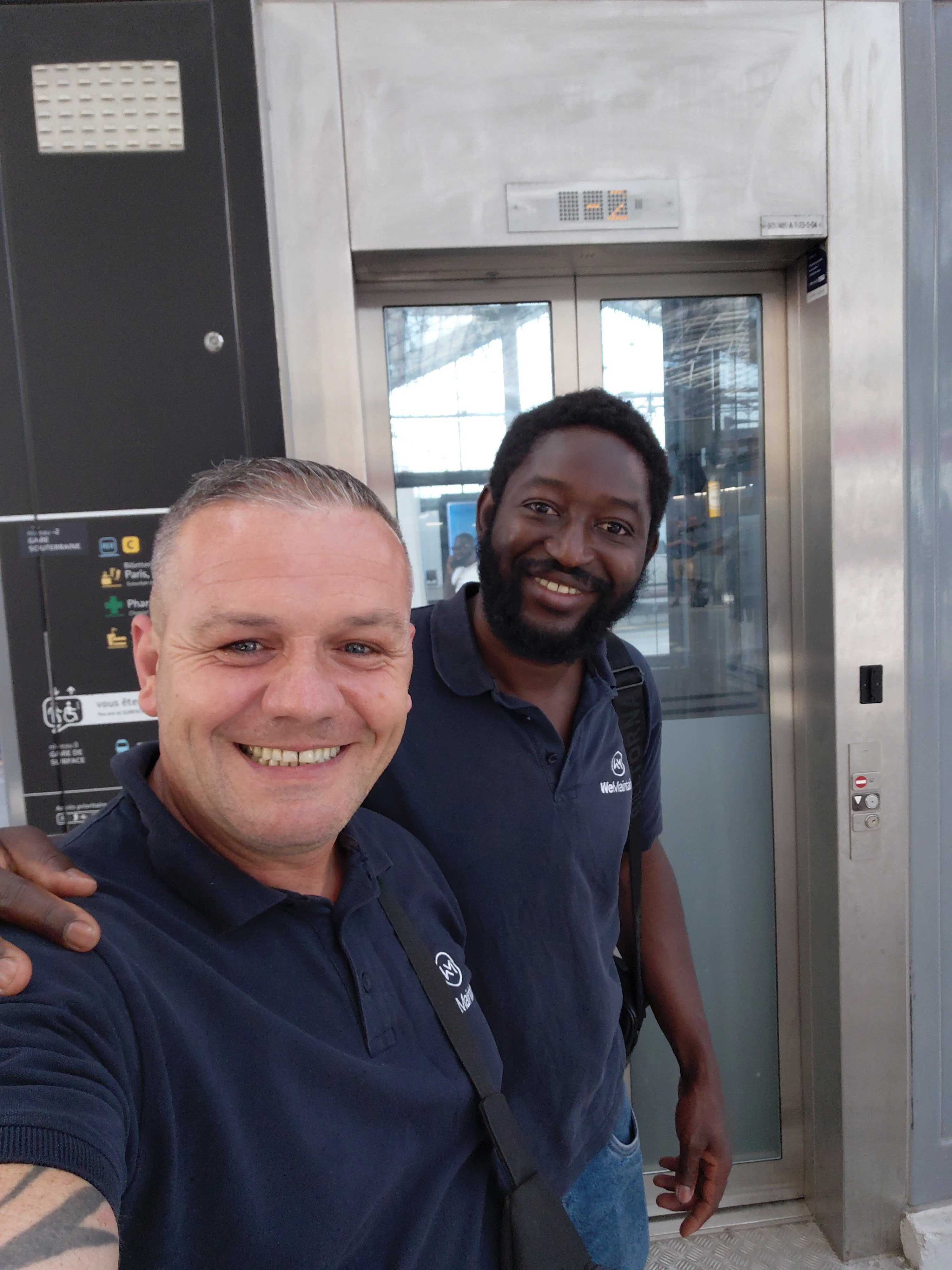
While residential buildings, hotels, offices, transport hubs and hospitals continue operating as normal, lift engineers remain on site keeping critical equipment running. Their work often takes place in demanding environments: poorly ventilated machine rooms, rooftop installations or lift shafts where temperatures can be significantly higher than those outside.
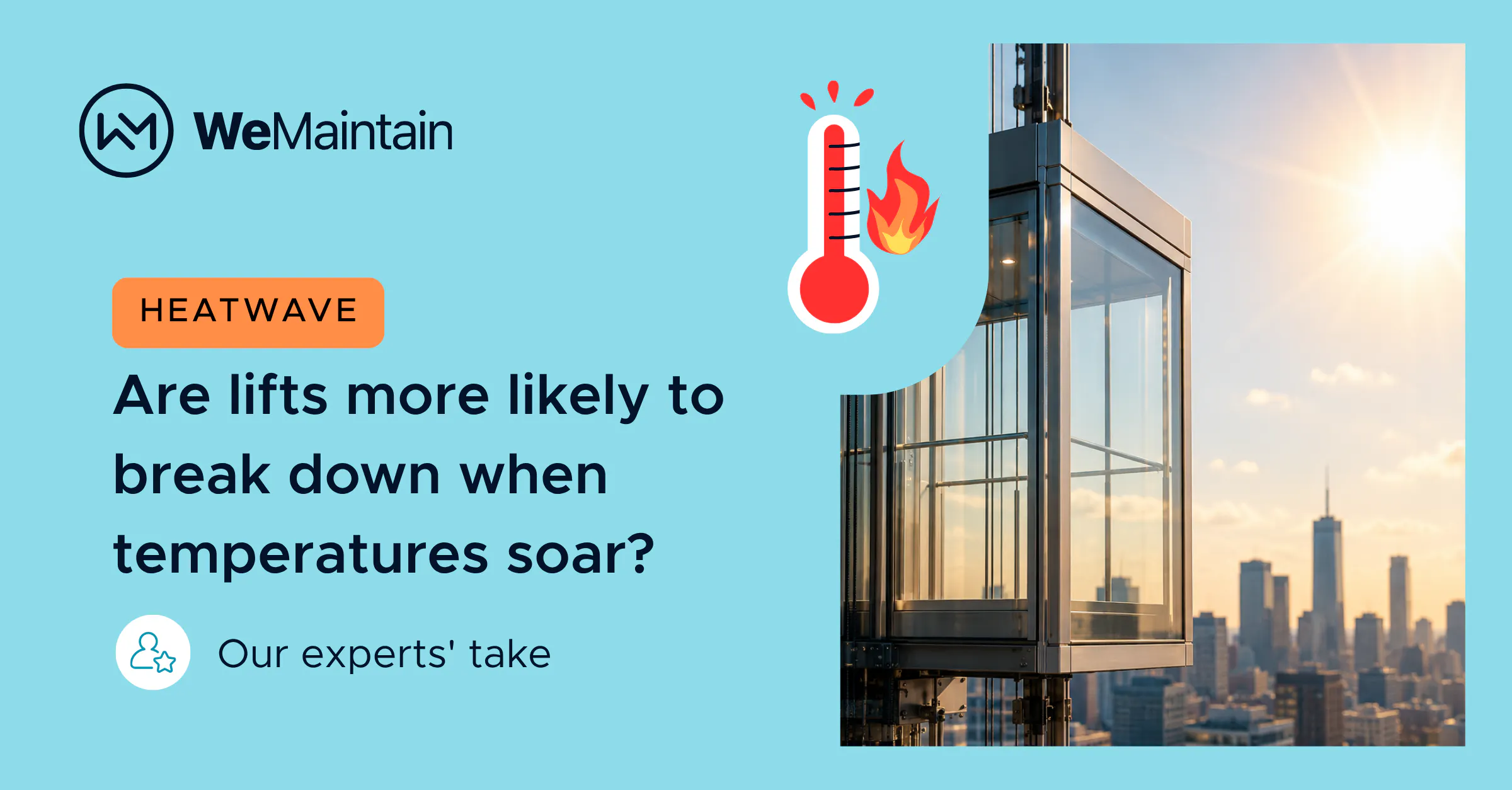
They may also work on fully glazed panoramic lifts which, under direct sunlight, can quickly become greenhouse-like environments. During some heatwaves, our teams have recorded temperatures of up to 45°C inside lift cars.

Every intervention requires engineers to assess the situation quickly, make the right decisions and restore essential equipment safely.
Whenever possible, work schedules are also adapted to reduce exposure to extreme heat. Maintenance visits are prioritised early in the morning to avoid the hottest part of the day, with some routes starting at dawn and finishing before midday where operationally feasible.
Their expertise makes all the difference. Digital tools, equipment history and real-time data help engineers prepare before arriving on site, but nothing replaces hands-on experience when diagnosing the root cause of a fault.
Technology isn't here to replace that expertise.
It's here to make it even more effective.
What's the biggest challenge for engineers during a heatwave?
"Working conditions become much more demanding. Some machine rooms can reach extremely high temperatures, so we need to work efficiently while maintaining the same high standards of safety and diagnostic quality."
Heatwaves are becoming the new normal. Maintenance needs to evolve with them.
Extreme weather events are no longer exceptional. They are becoming part of everyday building operations.
That means maintenance strategies must evolve as well: understanding how equipment behaves under stress, anticipating periods of higher risk and giving engineers the information they need to act before service is disrupted.
Because ultimately, the best breakdown is the one that never happens.
Is your lift portfolio ready for the next heatwave?
Our teams help building owners and facility managers improve lift availability through preventive maintenance, real-time monitoring and the expertise of specialist engineers.
Let's talk about how we can help your equipment stay reliable, even when temperatures rise.
Follow us on LinkedIn.