
Your building doesn't have a brand. So why should your maintenance strategy depend on one?

Author
Chloé
Audibert
Date
13/04/2026
Time
7 min read
Share


Most property portfolios aren't built around a single lift manufacturer. Buildings evolve, equipment gets modernised, assets get replaced, and portfolios grow. The result is often a mix of manufacturers, technologies and generations of equipment, all of which need to work reliably every day.
Yet lift maintenance has traditionally been closely tied to the original equipment manufacturer (OEM).
At WeMaintain, we take a different approach: brand-agnostic by design. We made the wider case for independent lift maintenance before; this piece goes further into what that means in practice.
Our engineers, tools and processes are built to work across manufacturers, so the name on the equipment doesn't determine how we maintain it. As the lift industry continues to consolidate, we believe flexibility matters more than ever.
What does brand-agnostic lift maintenance actually mean?
Being brand-agnostic means maintaining equipment based on what the asset needs, not who manufactured it.
For WeMaintain, that starts in the field. Our engineers are trained to work across multiple lift brands and technologies: they're not limited to one manufacturer's equipment, parts catalogue or maintenance approach.
But multi-brand maintenance goes beyond technical training. It also means being able to explore different solutions when diagnosing an issue, sourcing a component, or recommending how an asset should be maintained.
The objective is simple: find the right solution for the equipment and the building.
Why multi-brand capability matters for building owners
For building owners and property managers, a brand-agnostic approach can make managing complex portfolios simpler.
One maintenance approach across a mixed portfolio
A building, or an entire property portfolio, can contain lifts from several manufacturers. Working with a multi-brand maintenance provider means the maintenance strategy doesn't have to change every time the equipment brand does. Instead, one partner can apply consistent processes, reporting and service standards across the portfolio.
More flexibility when solving problems
When a maintenance provider isn't tied to a single manufacturer, teams can explore different routes to solve a problem, especially when sourcing parts. Rather than relying on one supply chain by default, an independent model lets teams weigh different suppliers and solutions on compatibility, availability, lead time and cost.
Decisions based on the asset
Being brand-agnostic also changes the starting point of the conversation. Instead of asking "What does this manufacturer recommend?", we start with "What does this asset actually need?": its condition, its usage, its performance, its maintenance history, and the needs of the people who rely on it every day.
Brand-agnostic from the engineer to the technology
At WeMaintain, multi-brand capability isn't limited to the engineer standing in front of the lift. Our technology and operational processes are designed around the same principle.
We combine field expertise with digital tools and equipment data to give our teams greater visibility into the assets they maintain, and help them make informed decisions. That means our approach stays consistent across different manufacturers: one common layer of visibility for property teams managing mixed portfolios, instead of separate ways of working depending on the logo on the lift.
Human expertise, augmented by technology, regardless of the equipment brand.

What does that change in practice?
Brand-agnostic maintenance only matters if it produces better options in the real world. Parts sourcing is a good example.
On one project, our team needed a brake pad for a Schindler lift. Instead of relying solely on the OEM supply route, we explored alternative sourcing options. The result: the part was sourced within one week, at roughly 25% of the price originally quoted through the OEM route. For the fuller comparison between OEM-tied and independent servicing, see our independent maintenance vs OEM guide.
That's one specific case, not a universal benchmark. But it illustrates something important: having more than one route to solve a problem creates options.
The same principle applies to complex technical issues. Our teams aim to respond within 48 hours, bringing together field expertise, technical support and sourcing capabilities to find the right next step.
Independence isn't valuable because of the label itself. It's valuable because of the choices it makes possible.
And what about Otis?
In April 2026, Otis became a strategic shareholder in WeMaintain. What hasn't changed is our operating model: WeMaintain remains a separate company, and our teams continue to maintain equipment across manufacturers with the same brand-agnostic approach.
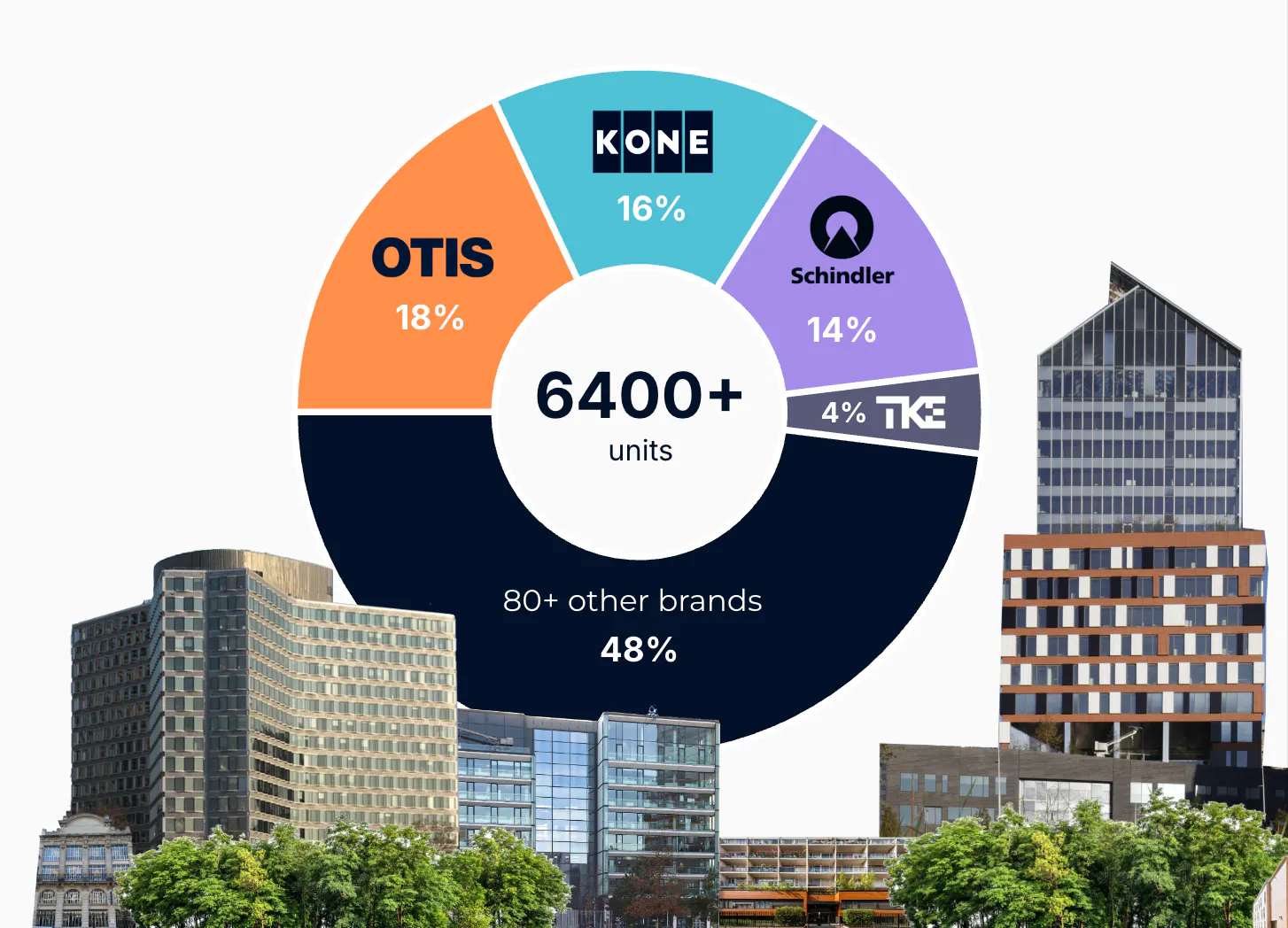
Our portfolio reflects that. Today, Otis equipment represents around 18% of the lifts we maintain, alongside KONE at 16%, Schindler at 14%, and equipment from more than 80 other brands.
For our customers and engineers, the principle stays the same: the brand on the equipment doesn't determine the quality of service it receives.
What should you look for in a brand-agnostic maintenance partner?
Not every company describing itself as independent or multi-brand operates the same way. If you're evaluating a maintenance provider, these questions can help you see how brand-agnostic their model really is:
- Are engineers trained to work across multiple manufacturers?
- Can the provider maintain a mixed portfolio under one contract and service model?
- Can they source compatible parts through multiple channels?
- How do they decide whether an asset should be repaired, modernised or replaced?
- Can they provide consistent data and reporting across different equipment brands?
- Can they demonstrate their multi-brand capabilities with real examples?
Ultimately, brand-agnostic maintenance is about more than maintaining different logos. It's about having the expertise, technology and flexibility to make the right decision for each asset.
The equipment should come first
The lift industry will keep evolving: manufacturers will consolidate, technology will change, and building portfolios will grow more complex. But the fundamental requirement for building owners stays the same: safe, reliable equipment, and a maintenance partner they can trust to make the right decisions.
That's why WeMaintain chose to be brand-agnostic by design. If you want to see what that looks like day to day, take a look at our maintenance offer.
Different brands. One standard of service.